


A distinct bureaucratic caste has emerged in the Ukrainian rear—one operating under the assumption that displaced person status and articulate punctuation on Facebook can override the Criminal Procedure Code. No sooner had the doors of the pretrial detention facility closed behind the Director of the Information Policy Department of the Luhansk Regional State Administration, Albina Kusheleva, and investigative reports detailing 80% postal kickbacks inside Nova Poshta courier boxes were filed, than the official appealed to the public. Her response came not in the form of financial audits, but as public lamentations regarding her "trampled honor and dignity".
The sharpest repudiation of this public victimhood came neither from political rivals nor from the "bots" she publicly blames, but directly from the zero line—from soldiers for whom their native Luhansk region has long since been reduced to artillery targeting coordinates.
Two Dimensions of Pain: A Comrade’s Phantom Limb vs. "Wounded Standing"
The public statement released by the department head following her release on a 266,000 UAH bail relied on well-worn dramatic tropes: “The war took away my home and my family. Those who declared me corrupt stripped me of my honor and dignity... The machine is spinning up very professionally: bot leaks, court orders, followed by sensational photos and claims of 'embezzled millions'...”. The official protests her mistreatment, omitting that the formal SBU suspicion under Article 191(4) of the Criminal Code is based on documented financial transactions and bank teller withdrawals, not social media commentary.
The divide between wartime administrative rhetoric and the reality of the front was captured by an infantryman hailing from the occupied Luhansk region:
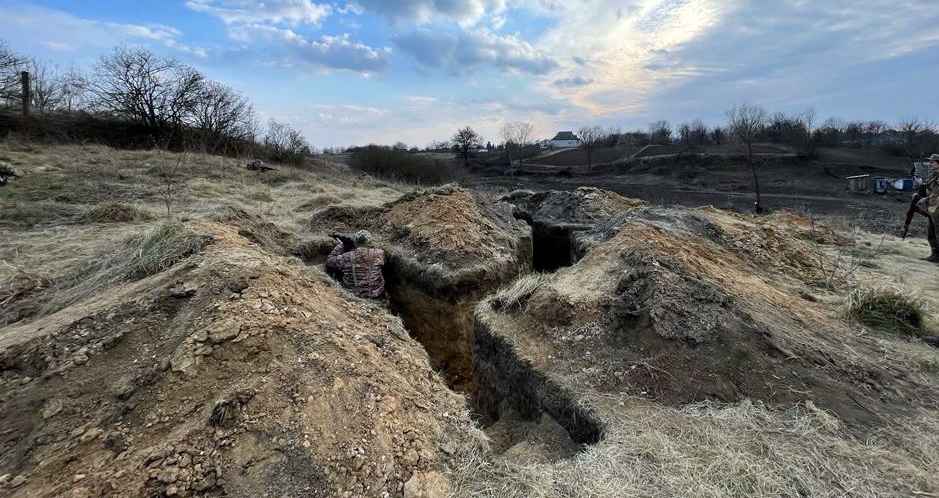
“So here I sit, in mud and clay, going on five years. Meanwhile, in the rear, somebody signs a piece of paper. Just puts down their signature—and money that should have bought a drone or an electronic warfare system turns into a service that doesn't exist. Into a kickback sent by courier—by mail, damn it, like a care package from home.
And the theft isn't even the most disgusting part. The most disgusting part is what comes after. After the fact, they take offense. Caught red-handed, they act hurt. Immediately, it’s all 'smear campaigns,' 'hit pieces,' 'honor and dignity destroyed.' Their reputation is hurting. Reputation! Did you hear that, boys? The lady's reputation is hurting.
My battle buddy hurts in a missing limb that isn't there anymore. A widow from Kramatorsk hurts at three in the morning when she wakes up, forgets for half a second, and then remembers. The mother of an MIA soldier has been hurting for two straight years, every single day, without weekends off. Yet they worry about their reputation. And they draft long essays. Beautiful, literate, with commas in all the right places. About how hard it is when society is unfair. About how they believe in justice. But justice seen from the front line is far simpler than in your posts: it means that what was paid for actually exists.
We aren't asking for gratitude. We aren't asking for monuments—there are far too many of those already. We are asking for one single thing: while we hold the line, you don't steal. That's it. It isn't heroism. It's baseline human decency expected even without a war, and during wartime all the more.
And if you can't manage even that—at least don't take offense out loud. Keep that much to yourselves. Because your slighted honor and our zinc coffins are completely different weight classes, and you know it.”
These words dismantle the official’s public defense far more definitively than a courtroom exchange. When a senior official from an administration in exile, earning an annual public salary approaching one million hryvnias, diverts public relations funds into private foreign currency holdings and demands public sympathy, it demonstrates a complete detachment from the wartime realities of the country.
The Mechanics of Cynicism: Courier Parcels Instead of Defense Equipment
While combat units on the front line measure tactical ground by the meter and pool their hazardous duty pay to repair damaged trucks, criminal proceeding No. 42026130000000016 details an entirely different logistics operation:
-
Procurement contract UA-2026-03-13-012479-a valued at 3.2 million UAH, designed to cross-post existing administration press releases onto third-party online portals;
-
A 455,700 UAH subcontract retaining a 20% conversion fee for the financial intermediary;
-
80% net cash kickbacks shipped across regional lines in standard Nova Poshta cardboard boxes: 76,800 UAH from Kropyvnytskyi and 63,000 UAH from Svaliava;
-
Deputy Department Director Andrii Zaitsev routinely collecting the parcels of cash at Dnipro Branch No. 20 on Bohdan Khmelnytsky Avenue for delivery to his direct supervisor;
-
The physical search findings: 10,000 EUR, 3,170 USD, and uncirculated 500 UAH banknotes with sequential serial numbers discovered in a residential closet, omitted from public asset declarations.
An Irreconcilable Divide
The defense team's assertion that this seized cash represented "routine media fees," alongside attempts to account for foreign currency through family employment within UN bodies, does not withstand evidentiary scrutiny. At the front, justice is evaluated directly: allocated public capital must result in operational capability, not private cash reserves.
Albina Kusheleva may continue to capitalize on the procedural error committed by SBU investigators, who failed to attach her official appointment decree to their court motion, thereby remaining in office. However, the framing of an innocent victim has been compromised.
When an administrative official implicated in postal kickback transfers uses social media to complain about personal hardship, it does not function as an effective legal defense. It stands in contrast to the front line, where soldiers hold defensive positions while postal packages of cash were being collected on Bohdan Khmelnytsky Avenue.







Залишити коментар