

Investigation by "On the Other Side of Dialogue" (Part 2): Counterintelligence’s silent protest, falsified protocols for commercial carriers, and media proxies that confessed in writing.
While the captive public relations apparatus of the Luhansk Regional Military Administration (OVA) attempts to silence journalists with anonymous legal demands from free email services, the regional administrative machinery has suffered a critical operational breach. In bureaucratic conflicts, an enduring truth remains: a system consistently documents its own misconduct far more thoroughly than any external auditor. One simply needs to master the forensic analysis of administrative records.
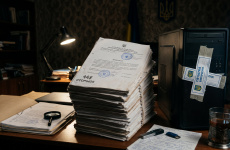
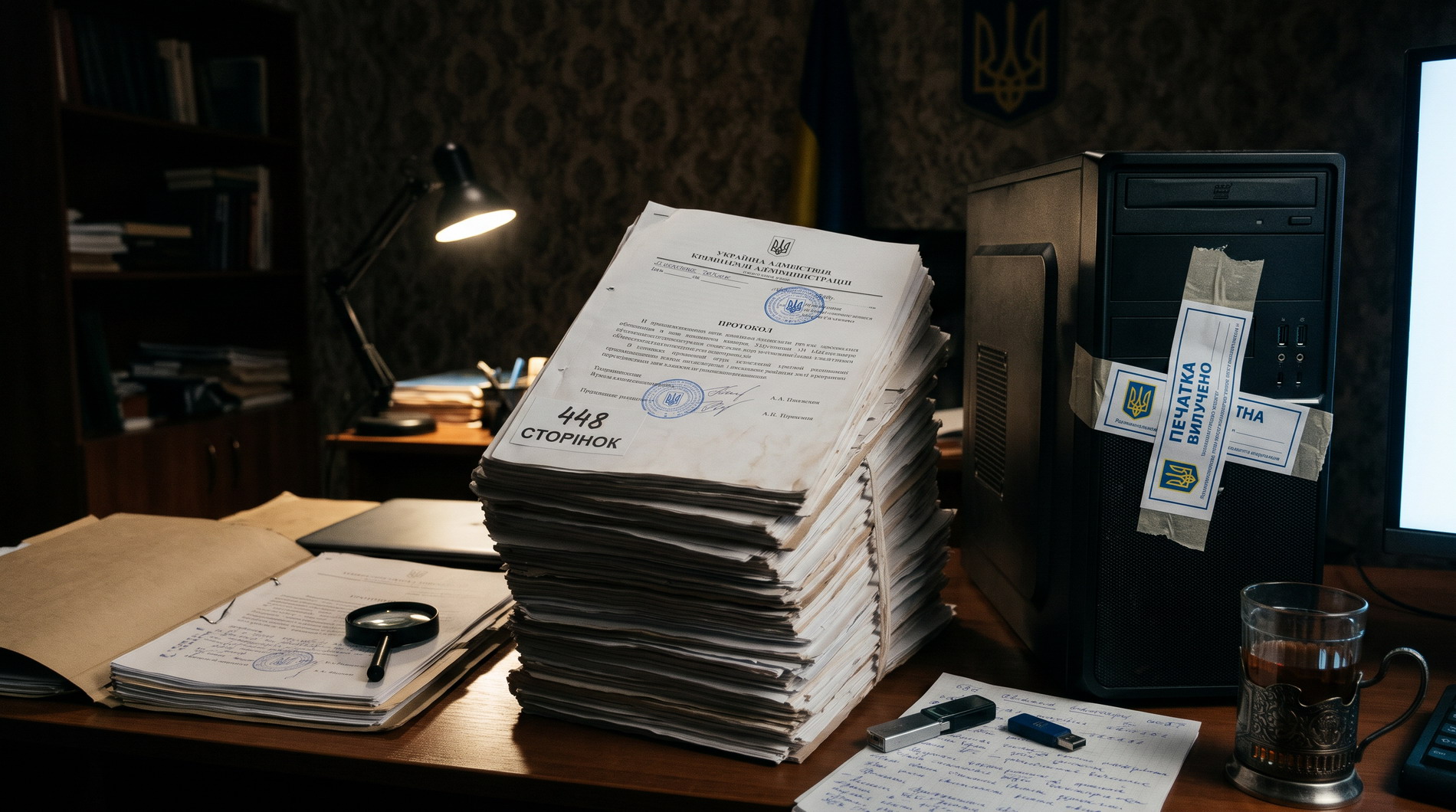
The editorial board of "On the Other Side of Dialogue" has completed a forensic review of 448 pages of original minutes from the Luhansk Regional Administration’s "Transparency and Accountability" Working Group, spanning August 2025 through late October 2026.
These records, ostentatiously established during martial law to prevent the misappropriation of wartime budgets, functioned in reality as a registry of administrative complicity. Yet even within this insular arrangement, an internal rupture emerged—one whose documentary remnants officials scrambled to conceal post factum.
I. The Bypassed Oversight Threshold: How Millions in PR Spending Were Concealed
Pursuant to foundational Protocol No. 1 dated August 14, 2025, the OVA working group instituted a rigorous threshold for anti-corruption screening: mandatory preliminary review was established for all procurement of goods and works exceeding 1.5 million UAH, and for all services exceeding 500,000 UAH.
A comparison with subsequent procurement filings reveals immediate evasion:
In spring 2026, the OVA Mass Communications Department initiated tender UA-2026-03-13-012479-a for "public information and regional activity coverage" valued at 3,210,900 UAH—more than six times the mandatory oversight threshold.
Were these multi-million budget allocations presented to the integrity oversight panel?
The regional authority resolved the question itself. On October 30, 2026, in formal response to our public records request, the acting director of the department, Roman Mamedov, issued official dispatch Ref. No. 04/3-43/1024 stating unequivocally:
"We inform you that procurement UA-2026-03-13-012479-a was not considered during sessions of the 'Transparency and Accountability' working group."
Over 3.2 million UAH in taxpayer funds were routed entirely around mandatory oversight because the secretary of that oversight body served simultaneously as the procurement's primary organizer.
II. Admissions from Tender Proxies: 80% Kickbacks and Cash-in-Transit Parcel Shipments
The secretary of the "Transparency and Accountability" working group, whose signature authenticated each session protocol, was none other than Deputy Department Head Albina Kusheleva.
As detailed in investigative rulings under Security Service of Ukraine (SBU) criminal proceeding No. 42026130000000016 (notably the Soborny District Court of Dnipro, Case No. 201/13681/26), department leadership engineered a coordinated bid-rigging scheme. To fabricate mandatory competitive bidding, officials engaged the nominally independent NGO "Vilny Skhid"—the institutional publisher of "IRTA-fax".
The procedural mechanics were documented with striking clarity: the designated tender winner retained approximately 20% for intermediary handling and cash conversion, while 80% of the public funds were routed back to administrative officials in cash via commercial parcel shipments operated by "Nova Poshta".
When Part 1 of our investigation was published on October 30, NGO "Vilny Skhid" dispatched a cease-and-desist letter. However, the response produced an overt legal admission. In its formal complaint, the publisher conceded in writing:
"We do not deny that published judicial decisions contain the prosecution's investigative narrative regarding the involvement of NGO Vilny Skhid as a technical participant in the procurement."
Furthermore, in subsequent correspondence dated October 31, the outlet admitted to contractual engagements funded by the administration, claiming that public compensation does not impede editorial independence. The evidentiary nexus is thus closed:
- The regional administration circumvented its own anti-corruption panel to award millions;
- The SBU initiated criminal proceedings regarding an 80% kickback mechanism;
- The contractor formally conceded its technical role in the documented bidding scheme;
- And Director Roman Mamedov confirmed in official dispatch No. 04/3-43/1024 that the primary desktop computer of anti-corruption panel secretary Albina Kusheleva was seized by SBU investigators during searches.
III. Counterintelligence Dissent: The Recorded Abstentions of Major Bednarskyi
The most telling finding across the 448 pages involves the documented conduct of state security representatives placed on the panel to lend institutional legitimacy.
From July through September 2026, as administrative expenditures reached unprecedented volumes, working group sessions recorded the participation of SBU Main Directorate officer Major Serhiy Bednarskyi.
A forensic review of the voting records demonstrates an unambiguous pattern of institutional dissent:
- Protocols No. 35, 37, 40, and 43: While administrative officials aligned with First Deputy Head Liudmyla Didenko voted in unison to approve questioned budget allocations, the voting ledger alongside Major Bednarskyi’s name persistently records: "DID NOT VOTE" or "ABSTAINED."
The counterintelligence officer refused to endorse the collective approvals. By that juncture, the security service was actively tracing physical cash logistics and preparing warrants for digital forensic seizures.
To manage internal exposure, administration leadership resorted to administrative manipulation in Protocol No. 44 dated September 24, 2026: Secretary Albina Kusheleva’s name was quietly excised from the attendance roster, with responsibilities reassigned without any reference to the seizure of her official workstation by federal investigators.
IV. Protocol No. 39 and Article 366 of the Criminal Code: Official Forgery Benefiting "Helios-Trans"
Working group documentation reveals evidence transcending mere regulatory negligence, meeting the statutory elements of official forgery under Article 366 of the Criminal Code of Ukraine.
A primary example appears in Order No. 396 executed on August 18, 2026, by the head of the Luhansk Regional Administration, Oleksiy Kharchenko, authorizing public subsidies to carrier "Helios-Trans." The executive order explicitly cites prior approval by the "Transparency and Accountability" working group during its August 13, 2026 session.
However, an inspection of Protocol No. 39 dated August 13, 2026 (page 312) reveals:
The official agenda was confined exclusively to civilian shelter construction and medical supplies for liberated communities. There is no reference whatsoever to "Helios-Trans," nor any recorded discussion regarding transportation subsidies.
The executive order was substantiated by a formal oversight approval that never occurred, documenting the insertion of deliberately fabricated entries into official state acts.
V. The True Source of Media Agitation: Where Are Lysychansk’s 401.7 Million UAH?
These evidentiary findings explain why regional administration media outlets—specifically "IRTA-fax," sd.ua, and "TRIBUN"—initiated coordinated editorial attacks against our administrative lawsuit before the Dnipropetrovsk District Administrative Court (Case No. 160/34036/26).
The litigation seeks the revocation of Regional Order No. 452 governing a 500-million-UAH allocation, alongside the judicial subpoena of the classified 2025 "Registry No. 2," under which 401.7 million UAH from the budget of devastated Lysychansk was liquidated.
Neither administrative mouthpieces nor NGO "Vilny Skhid" in their legal correspondence addressed the fundamental subject of the challenge:
- Which regional officials are named in the closed records as recipients of housing subsidies drawn from municipal war relief funds?
- How many senior administrators resolved private mortgages in Kyiv and Dnipro at the expense of an obliterated frontline community?
In place of public accountability, the regional administration relies on falsified records, institutional evasion, and 20% commission payouts to media proxies tasked with discrediting litigation.
The 448 pages of Luhansk Regional Administration protocols have dismantled the narrative of credible governance in exile. The seizure of administrative computer hardware by SBU investigators marks merely the initial physical evidence.
Certified extracts of Protocols No. 1, 39, and 44, official response No. 04/3-43/1024, and the pre-litigation correspondence have been submitted to the court record in Case No. 160/34036/26, with copies forwarded to the National Anti-Corruption Bureau of Ukraine (NABU) for statutory assessment under Articles 191, 364, and 366 of the Criminal Code.






Залишити коментар